Best Place for Dehumidifier: How to Reduce Moisture and Improve Indoor Air Quality
Overhumidity can harm your property, make your living area uncomfortable, and even have an adverse effect on your health.
Recent Blogs
- Neiman Marcus Celebrates 2025 Fantasy Gifts
- Why a Men’s Apparel Membership Could Save You Money
- Lionel Messi Rocks Sleek Inter Miami CF 2025 Travel Pullover Hoodie Ahead of Preseason Tour
- Why I Chose the Omnilux Contour Face Mask for My Skincare Journey
- DryWater Reviews: The Truth Behind the Hydration Revolution
- Looking for the Perfect Raised Garden Bed? Here's How to Set It Up for Long-Term Gardening Success
- Looking for Stylish Reading Glasses? How to Choose Cat Eye Frames That Flatter Your Face and Elevate Your Look
June 26 16
Have you noticed condensation on windows, a musty smell in your house, or that persistent sticky feeling? Overhumidity can harm your property, make your living area uncomfortable, and even have an adverse effect on your health.
Even after purchasing a dehumidifier, many homeowners still find it difficult to get the desired outcomes. The cause is frequently straightforward: the unit isn't positioned properly, isn't linked to the home's ventilation system, or isn't strong enough for the area.
This article will assist you in selecting the ideal location for dehumidifier installation, whether you require a dehumidifier for HVAC unit integration or whether a dehumidifier hanging configuration would be suitable for your house.
Common Humidity Problems Homeowners Face
Indoor humidity problems can manifest in a variety of ways, such as:
- Musty smells in basements and crawl areas
- proliferation of mold and mildew
- Condensation on walls and windows
- Furniture and flooring made of warped wood
- An increase in the symptoms of allergies
- Increased expenses for cooling during the summer
The difficulty is that a lot of people focus on treating their symptoms rather than the underlying cause of the moisture issue.
A more complete solution is frequently required if the humidity levels in the house continue to be excessive, even though a small handheld dehumidifier might be helpful in the short term.
What Causes Excess Humidity?
It's crucial to comprehend why humidity builds up before deciding on the best course of action.
Inadequate Ventilation
Moisture can be trapped indoors in homes with inadequate ventilation. Large volumes of water vapor are released into the atmosphere during routine tasks like cooking, taking a shower, and doing laundry.
Moisture in Crawl Space
The air quality of the entire house might be impacted by moisture seeping in via the foundation or ground. Crawl areas are a hidden cause of humidity issues in many homes.
Limitations of HVAC Systems
Air conditioners are not usually made to maintain optimal humidity levels, even though they do remove some moisture. For this reason, a lot of homeowners eventually think about integrating a dehumidifier with their HVAC system.
Conditions of the Seasonal Weather
Standard systems struggle to control humidity in humid settings because external moisture can readily find its way inside.
Finding the Best Place for Dehumidifier Installation
The location of a dehumidifier is one of the most often asked questions by homeowners.
Central Regions
The ideal location for a portable dehumidifier is typically close to the room's center, where airflow is unhindered. Don't put it right up against furniture or walls.
Basements
Humidity is frequently initially apparent in basements. Here, installing a dehumidifier can assist in shielding stored items and stopping the formation of mold.
Crawl Areas
Installing a dehumidifier in the crawl space can solve the issue closer to the source if moisture comes from beneath your house.
Close to Current Airflow Systems
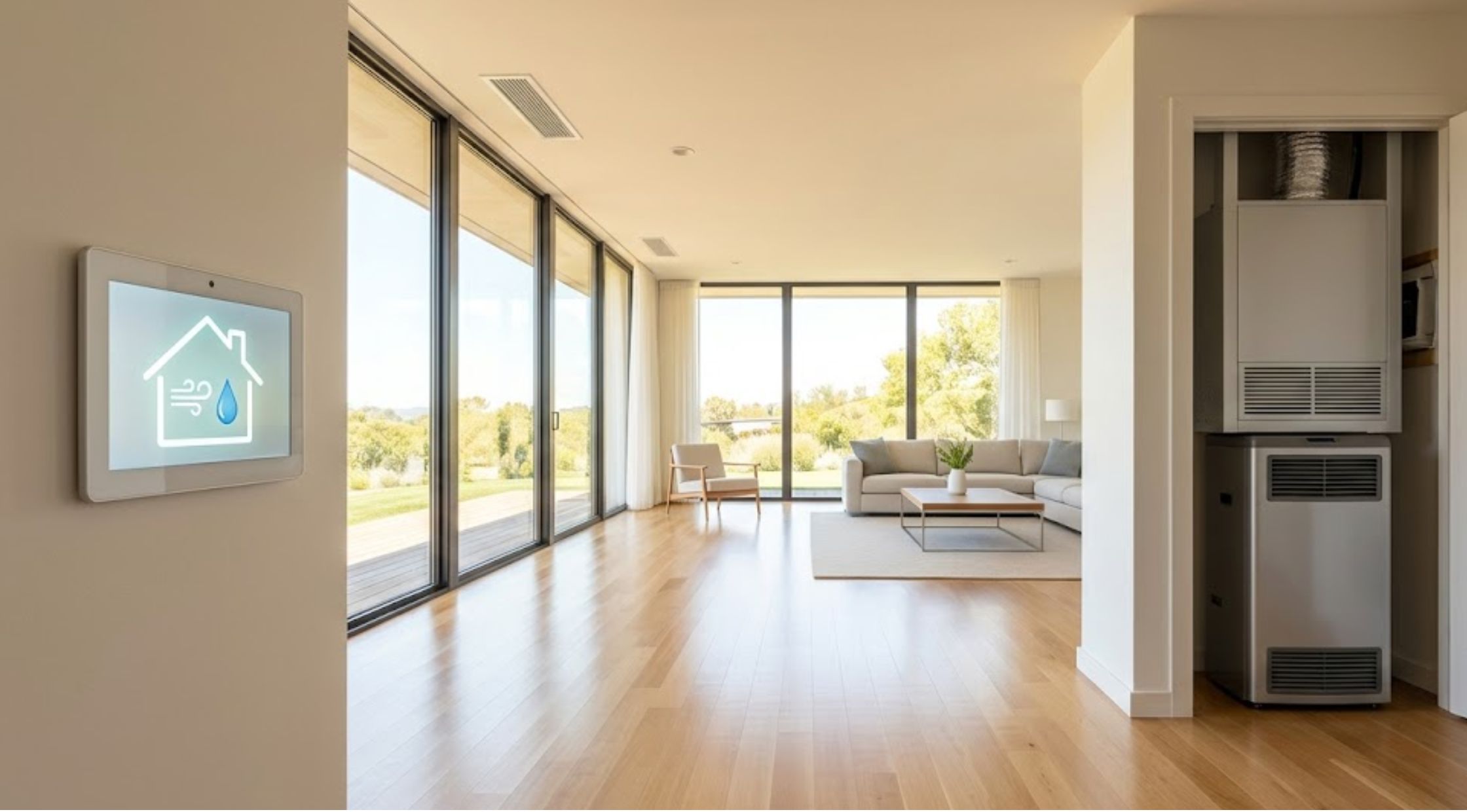
If at all possible, place the unit close to the HVAC return airflow to increase the effectiveness of moisture removal and better disperse drier air throughout the house.
Why Consider a Dehumidifier for HVAC Unit Integration?
For isolated areas, portable units are helpful, but whole-home humidity problems frequently call for a different strategy.
For HVAC unit integration, a dehumidifier complements your current HVAC system. It helps control humidity across the entire house rather than just one room at a time.
Benefits include:
- Regular regulation of humidity
- Better indoor air quality
- decreased chance of mold
- Increased HVAC effectiveness
- Increased comfort all year long
For HVAC unit setup, many homeowners discover that a dedicated dehumidifier yields more dependable results than numerous portable devices dispersed throughout the house.
Is a Dehumidifier Hanging Installation Right for You?
A dehumidifier hanging design might be a useful solution in confined places.
Crawl spaces, utility rooms, and other places with constrained floor space frequently employ this configuration. When the unit is correctly suspended, homeowners can:
- Make the most of the available space
- Enhance your drainage options
- Minimize obstructions while doing maintenance
- Keep standing water away from the equipment.
Excellent performance can be achieved while maintaining accessibility and organization in the space with a professionally designed dehumidifier hanging system.
A Smarter Long-Term Solution
Equipment quality is crucial to the performance of humidity management, even though placement and installation are important.
Because they are made for harsh conditions, solutions like the Alor Air Crawlspace line are frequently taken into consideration by homeowners who have ongoing moisture problems in crawl spaces or bigger regions.
These systems, in contrast to simple consumer-grade units, are designed to withstand higher moisture loads and continuous operation, which makes them appropriate for difficult environments where humidity is still a persistent issue.
Many homeowners find that installing a high-capacity dehumidifier in the ideal area yields much better results than using a tiny, portable type alone.
The Benefits of Upgrading Your Humidity Control System
Beyond comfort, there are advantages to purchasing a more capable solution.
Improved Air Quality
Controlling humidity effectively helps lessen the conditions that encourage the growth of mold and mildew.
Reduced Energy Expenses
Your air conditioning system can function more effectively when the humidity levels are managed.
Protection of Your Home
Moisture-related damage is less likely to affect wood, soundproofing, and stored items.
Enhanced Comfort
All year long, a well-balanced interior space feels cooler, fresher, and cozier.
Many homeowners report better moisture management and fewer recurrent humidity issues after upgrading to systems like Alor Air Crawlspace units.
Integrating whole-home humidity control with a high-quality system might yield even larger benefits when a dehumidifier for HVAC unit setup is feasible.
Conclusion
Selecting the appropriate dehumidifier is just one aspect of the solution. Results can be significantly improved by determining the ideal location for dehumidifier installation, assessing if a dehumidifier for HVAC integration of units makes sense, and taking into account a dehumidifier hanging configuration for confined areas.
Investing in a dependable solution like Alor Air Crawlspace can offer homeowners with persistent humidity issues more efficient and reliable moisture control in the long run.
The objective is to make the house healthier, cozier, and better protected, not just to get rid of moisture. You can experience lasting gains in indoor air durability and ease by making well-informed decisions about equipment quality, system design, and location.
Comment:
Your email address will not be published. Required fields are marked *


You Might Also Like